Manitoba’s Cigar Lounge Loophole and Why it Needs to Close
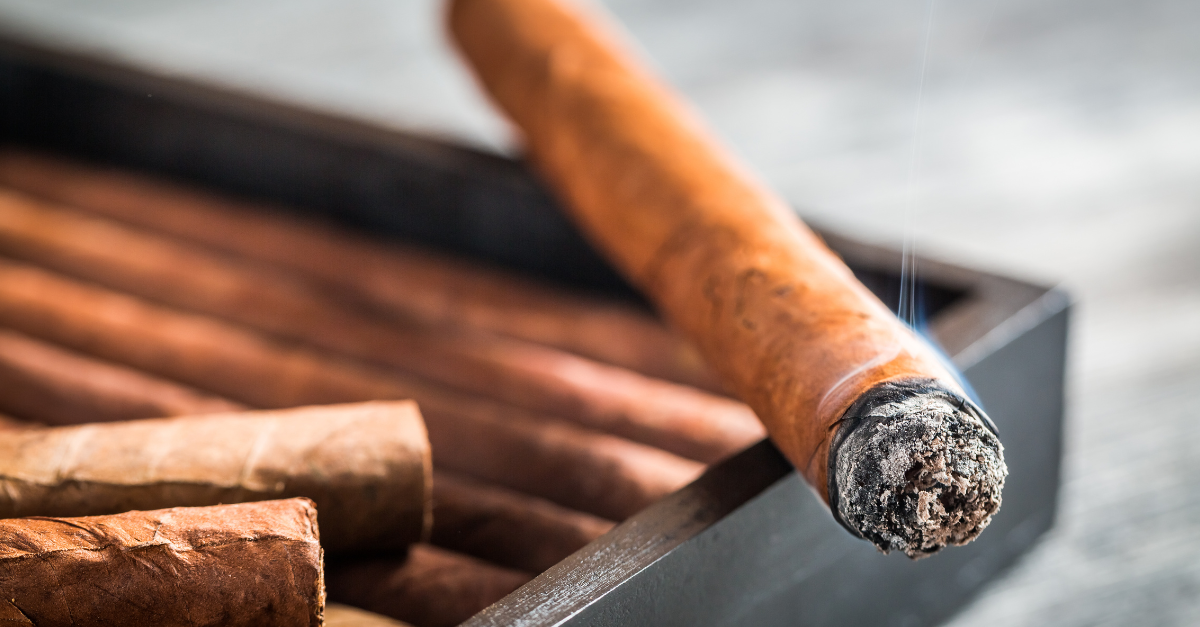
Despite broad indoor smoking bans, a loophole in Manitoba’s legislation has allowed cigar lounges to open and operate indoors.
At the same time, cigar use is growing. Canada’s cigar market has increased by an estimated five to seven percent annually in recent years and was valued at roughly $300 million in 2024 (Piché, 2025). As cigars gain popularity and visibility, indoor cigar smoking raises serious concerns about second-hand smoke exposure, air quality, and worker safety.
The rest of Canada has already determined that indoor cigar smoking poses unacceptable risks. Manitoba is long overdue in taking that same stance.
How Manitoba’s laws allow cigar lounges
Manitoba’s indoor smoking restrictions are intended to protect people from exposure to tobacco smoke in public places and workplaces. However, cigar lounges exist because of a specific exception in provincial and municipal legislation.
In short, the loophole works as follows:
Manitoba’s Smoking and Vapour Products Control Act broadly prohibits indoor smoking, and cigars are included under the Act’s definition of smoking.
However, the Act includes an exception for tobacconist shops, allowing owners, employees, and customers to smoke tobacco products on site to test or sample them.
To qualify, the shop must be fully enclosed by floor-to-ceiling walls, a ceiling, and doors separating it from areas where smoking is not allowed.
If open for business, the shop must also have a separate ventilation system.
City of Winnipeg By-law 88 allows similar exemptions for tobacconists that are physically separated and enclosed from other public places or private clubs.
These laws do not define what qualifies as an adequate ventilation system, and there are no clear standards or performance requirements for protecting people from second-hand smoke exposure.
This exception exists even though indoor smoking and vaping are otherwise prohibited across Manitoba. Cigars are treated differently, despite producing smoke that contains many of the same harmful substances.
It’s important to note that this is not comparable to other indoor activities, such as alcohol consumption. Drinking indoors does not expose others nearby to toxic byproducts simply by sharing the same air. Smoking does.
Why this loophole needs to be closed
Allowing indoor cigar smoking undermines the intent of Manitoba’s smoke-free laws.
From a prevention perspective, cigar lounges contribute to the normalization and glamorization of tobacco use. Cigars are often framed as premium or occasional products, which can minimize their health risks and make them more appealing to new or younger users.
From a protection standpoint, the loophole fails workers and others who cannot easily avoid exposure. Employees experience repeated, prolonged exposure to second-hand smoke. People in neighbouring commercial units or residential spaces may also be affected, particularly in shared buildings.
From a denormalization perspective, treating cigars as an exception sends a mixed message. If smoking and vaping are not permitted indoors because of health risks, cigars should not be exempt.
Most provinces and territories have already closed this door. Manitoba’s approach leaves it out of step with established public health practice.
The health impacts of cigar smoking
Cigars are not a safer alternative to cigarettes.
Cigar smoke contains many of the same toxic and cancer-causing chemicals found in cigarette smoke.
Research links cigar smoking to cancers of the lung, mouth, throat, larynx, esophagus, stomach, pancreas, and urinary system.
Current cigar smokers face higher risks of all-cause and cancer-related mortality compared to people who have never used tobacco.
Daily cigar use is associated with increased risk of lung cancer and chronic obstructive pulmonary disease.
Secondhand smoke from cigars also poses serious risks. There is no safe level of exposure. It increases the risk of heart disease, lung cancer, asthma symptoms, and other respiratory conditions in non-smokers. Ventilation systems may reduce odour, but they do not eliminate the health risks associated with indoor tobacco smoke.
What we want to see change
This is a clear and fixable policy gap we want to see addressed in 2026.
Our goal is to see this loophole closed so that indoor cigar smoking is no longer permitted in public or privately operated spaces in Manitoba. Indoor commercial smoking should not be an exception.
If you support closing the cigar lounge loophole, consider contacting your local MLA to let them know this matters. Consistent smoke-free laws protect workers, residents, youth, and the public.
Resources
Government of Manitoba Smoking and Vapour Products Control Act
City of Winnipeg Smoking Regulation By-Law No.88
If you or someone you care about is thinking about quitting smoking, we’ve rounded up quit resources available in Manitoba.
You can also subscribe to our e-newsletter for updates on tobacco and nicotine policy, research, and resources across Manitoba.