What Dentists Are Seeing from Smoking, Vaping, and Nicotine Pouch Use
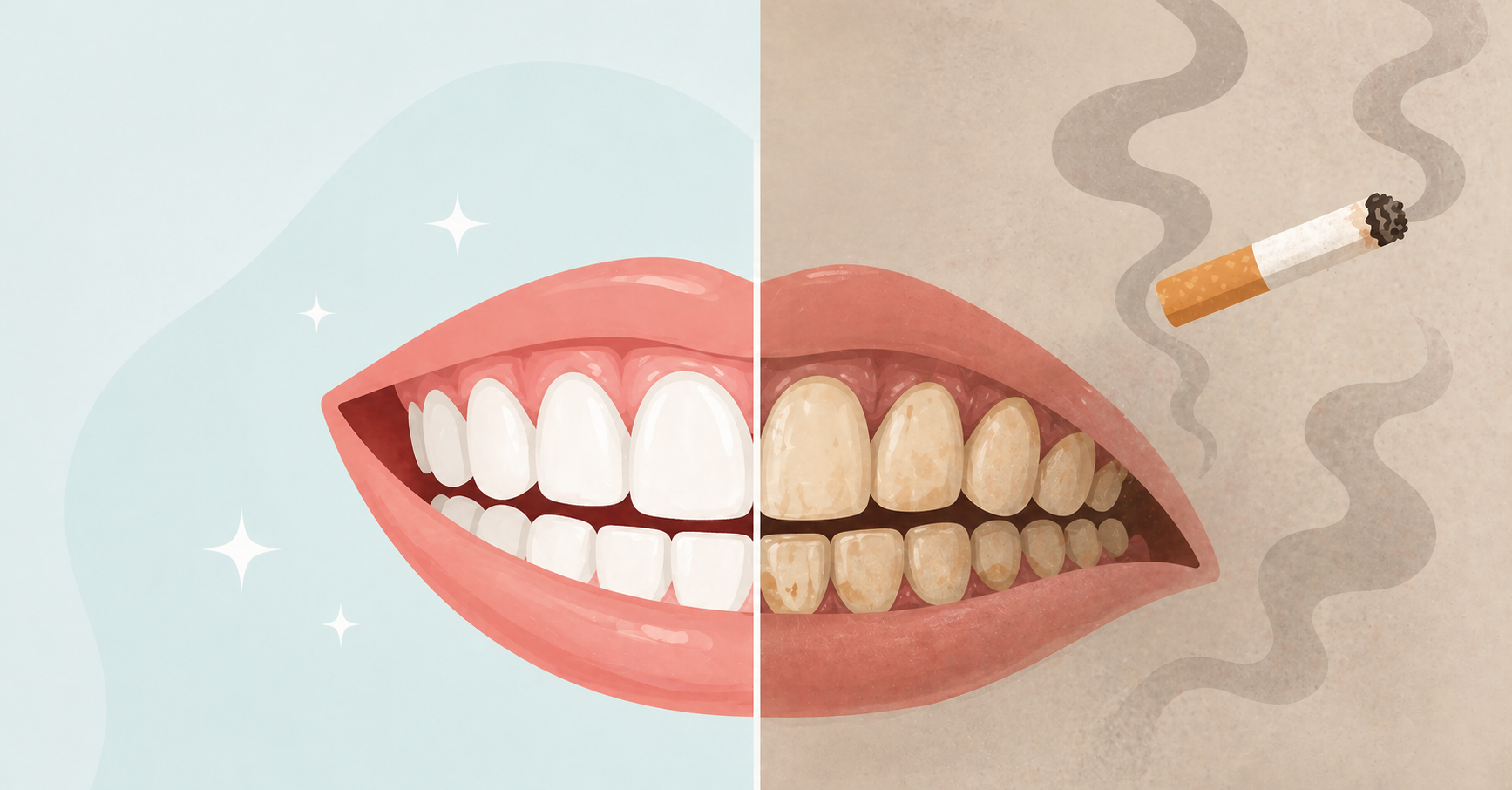
We often hear about how smoking and vaping affect the lungs, heart, and overall health. But one of the first places damage can show up is the mouth.
Dental professionals see the effects of tobacco and nicotine use every day, often earlier than people expect.
We spoke with two Manitoba dental professionals, Dr. Ernest Cholakis and Dr. Morgan Winchar, to better understand what they’re seeing and what people need to know.
What smoking and vaping are doing to your mouth
The effects of smoking on oral health are well established.
Dentists regularly see gum disease, delayed healing, tooth discolouration, bad breath, and changes in the soft tissues of the mouth. Over time, smoking also increases the risk of oral cancer.
Vaping may look different, but it’s not harmless.
“Dry mouth, more plaque retention, gum inflammation, and conditions in the mouth that make cavities more likely,” are some of the common issues, according to Dr. Cholakis. “I would not describe vaping as harmless from an oral-health perspective.”
Dry mouth might not sound like a big deal, but saliva helps protect your teeth. When your mouth is dry, bacteria can build up more easily, increasing the risk of cavities and gum problems.
These aren’t distant risks. They’re changes that can start happening early on.
What nicotine pouches are doing to your gums
Nicotine pouches are often marketed as a cleaner or safer option.
But dentists are seeing a different side of that story.
“The main issues we watch for are localized irritation where the pouch is placed, including white mucosal changes and site-specific gum recession,” says Dr. Cholakis. “The research is still emerging, but there is enough concern that these products should not be treated casually.”
Because pouches sit in the same spot in the mouth, the damage tends to be concentrated.
Dr. Winchar has seen this firsthand.
“We’re seeing chronic inflammation where the pouch sits, along with gum recession and root exposure,” he explains. “That can lead to increased tooth sensitivity.”
This isn’t spread evenly across the mouth. It builds up in the exact place the pouch is used, over and over again.
Why youth are especially at risk
Younger patients are showing signs of nicotine use more often, especially from vaping and pouches.
And many don’t fully understand the impact.
“We are certainly seeing this in teens and young adults,” says Dr. Cholakis. “The biggest issue is that vaping or pouch use is not always perceived as ‘real tobacco use,’ so they may underestimate both addiction risk and oral consequences.”
That perception matters. If something doesn’t feel risky, it’s easier to use it more often and for longer.
Dr. Winchar sees the results in the clinic.
“Younger patients are coming in with gum recession and inflammation that’s more advanced than it should be for their age,” he says. “A lot of them know it’s not great for their lungs, but they’re not thinking about what it’s doing to their mouth.”
The problem is that these changes can start small and go unnoticed until they’re harder to reverse.
Dental professionals can help you catch it early
The good news is that these changes don’t go unnoticed.
Dental professionals are often the first to spot early signs of damage and connect them to nicotine use.
“Our role is to ask, document, educate, and support,” says Dr. Cholakis. “Even a brief conversation that connects a patient’s habit to what they can see in their own mouth can be very effective.”
That might mean tracking gum recession over time, pointing out inflammation, or showing how things are improving or getting worse.
“It’s one thing to talk about risk, but when patients can actually see the changes in their own mouth, it really hits home,” says Dr. Winchar.
Dental visits can also be a starting point for change. Many clinics can connect patients with supports and tools to help them cut back or quit.
That includes resources like MANTRA’s Motivation Meters, which help people better understand the risks of nicotine use and the benefits of quitting, as well as access to supports for quitting smoking or vaping.
Nicotine use doesn’t just affect your long-term health. It shows up in your mouth, often earlier than people expect.
The upside is that early signs give you a chance to do something about it.